

Key West, Florida · The Story Behind the Stay
The Artist House: Anne’s Ghost, Robert the Doll & the Haunted Turret
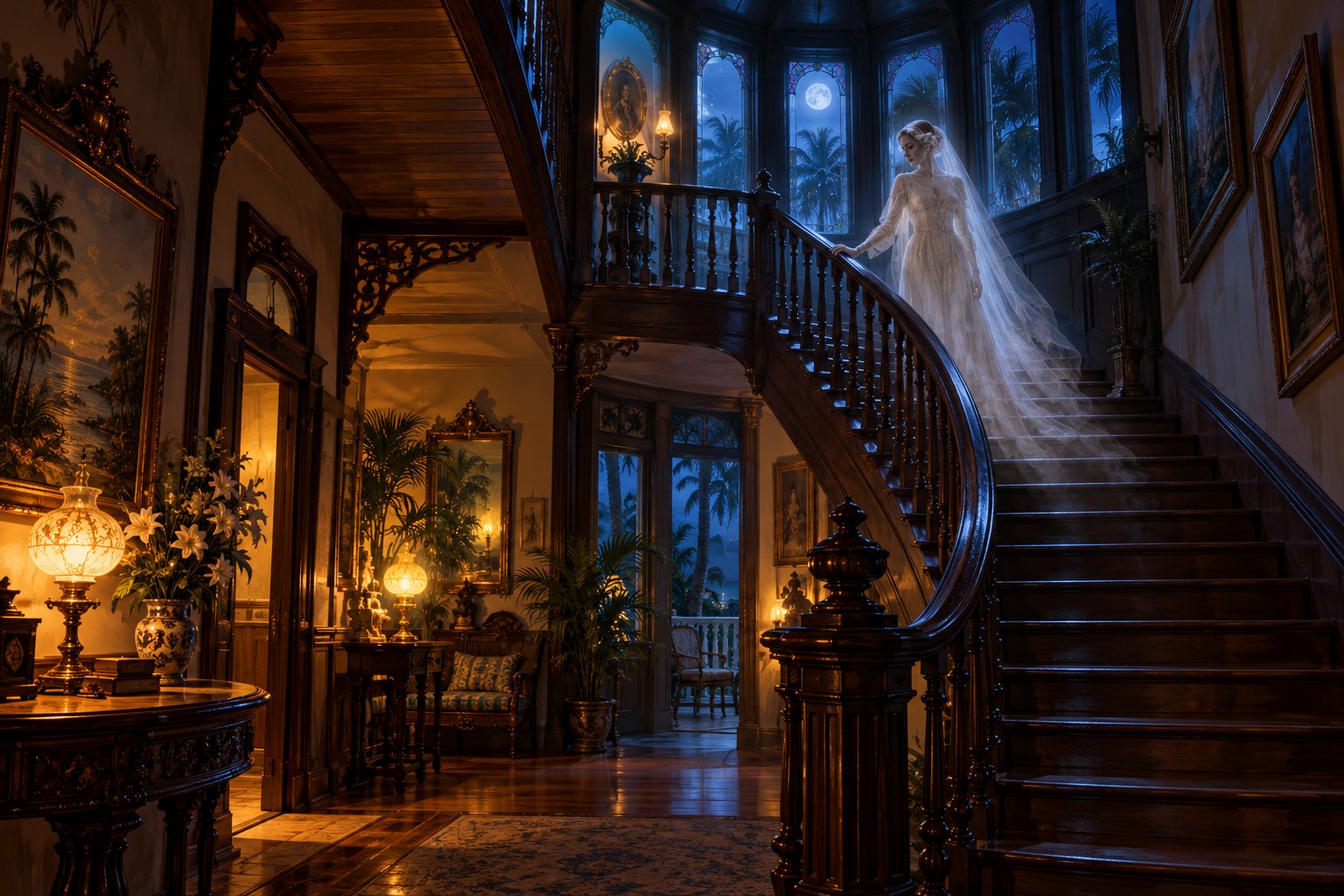
A woman in a wedding dress descends the staircase. A doll seems to change its expression as people talk about its owner. At the Artist House in Key West, the unsettling stories begin with a family home—and the suggestion that its occupants could still be listening.
The Artist House ghost stories have two distinct threads: Anne Otto’s reported apparition and the strange behaviour attributed to Robert the Doll. Follow both, and you have a haunted journey that leads from a guesthouse in Old Town to a museum across the island.
Researched September 27, 2026. These are attributed accounts and local legends, not verified paranormal events or a firsthand Go Ghostly investigation.
Anne Otto: the bride on the staircase
The inn’s own history page preserves an account attributed to a September 24, 1997 Key West Citizen article by Ramon Rios. A guest in the Turret Suite is invited to imagine a woman appearing on its winding stairs, dressed for her wedding. The figure is identified as Anne, wife of painter Robert Eugene “Gene” Otto.
The inn also recalls a television retelling of that same image. It describes the encounters as friendly, while acknowledging that it cannot vouch for every story. The published passage supplies no named witness or date for a specific sighting, so the bride remains an enduring local account rather than a documented incident we can reconstruct.
The woman at the end of the bed
Ghost City Tours adds another version: guests waking to a woman’s shadowy form at the foot of the bed. Its account also mentions doors moving, flickering lights and people claiming conversations with an apparition. The operator interprets her as Anne watching over the house.
There is no transcript of those conversations or detailed witness statement on the page. We cannot supply words for her. What survives is the image of a hostess still making her rounds, close enough to be mistaken for someone living.

Robert: the doll at the turret window
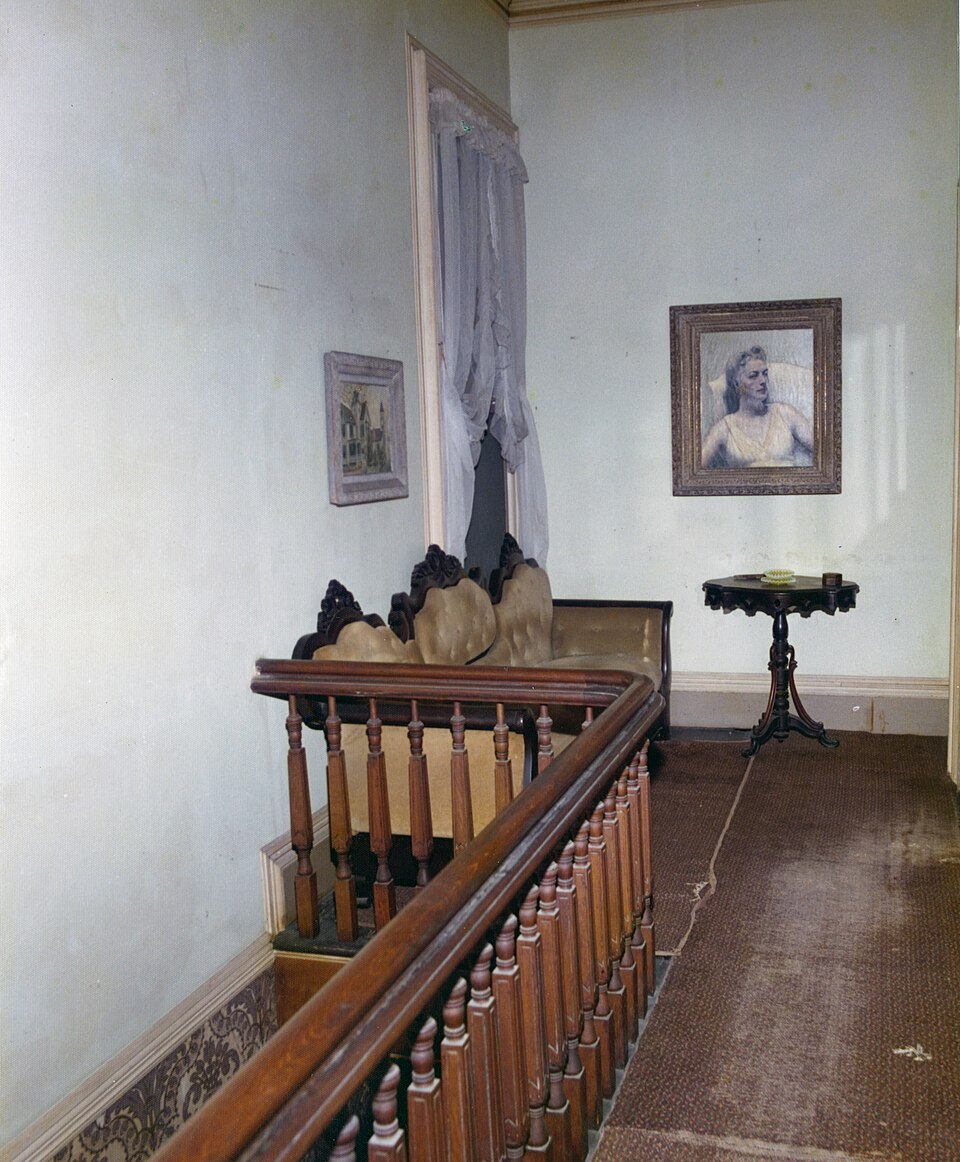
In the Artist House’s telling, Gene’s childhood attachment to Robert continued into adulthood. The doll received its own small world of furniture and toys. When Gene painted upstairs, Robert sat nearby at a southwest-facing window.
That window carried the story beyond the household. Schoolchildren passing outside reportedly saw the doll change position. Visitors described its face appearing to react to the conversation around it; other accounts mentioned laughter or finding Robert somewhere different in the room.
The familiar explanation for trouble in the house was that Robert had done it. A child blaming a toy is easy to understand. The disquiet comes when the story adds other people who believe they saw the toy act independently.
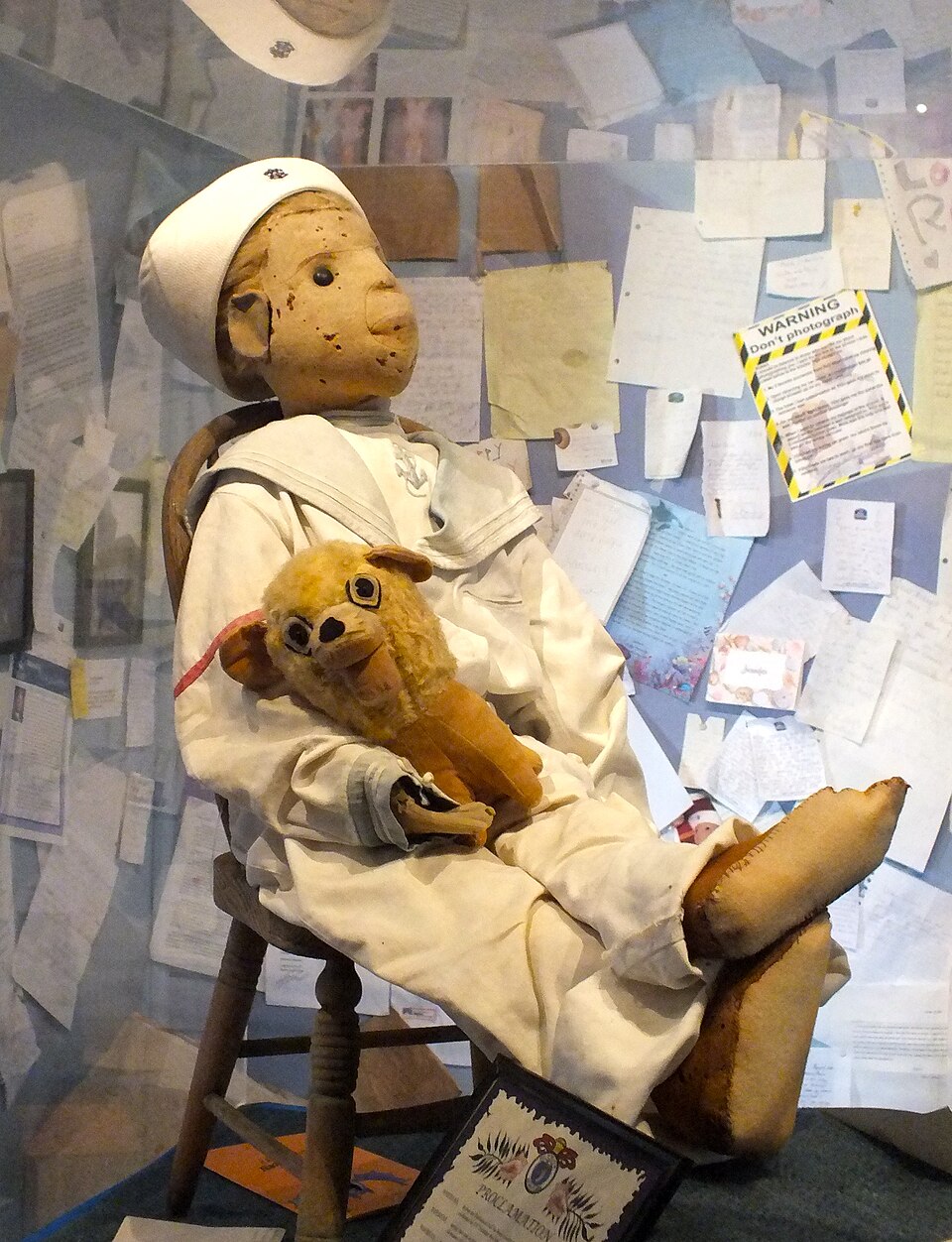
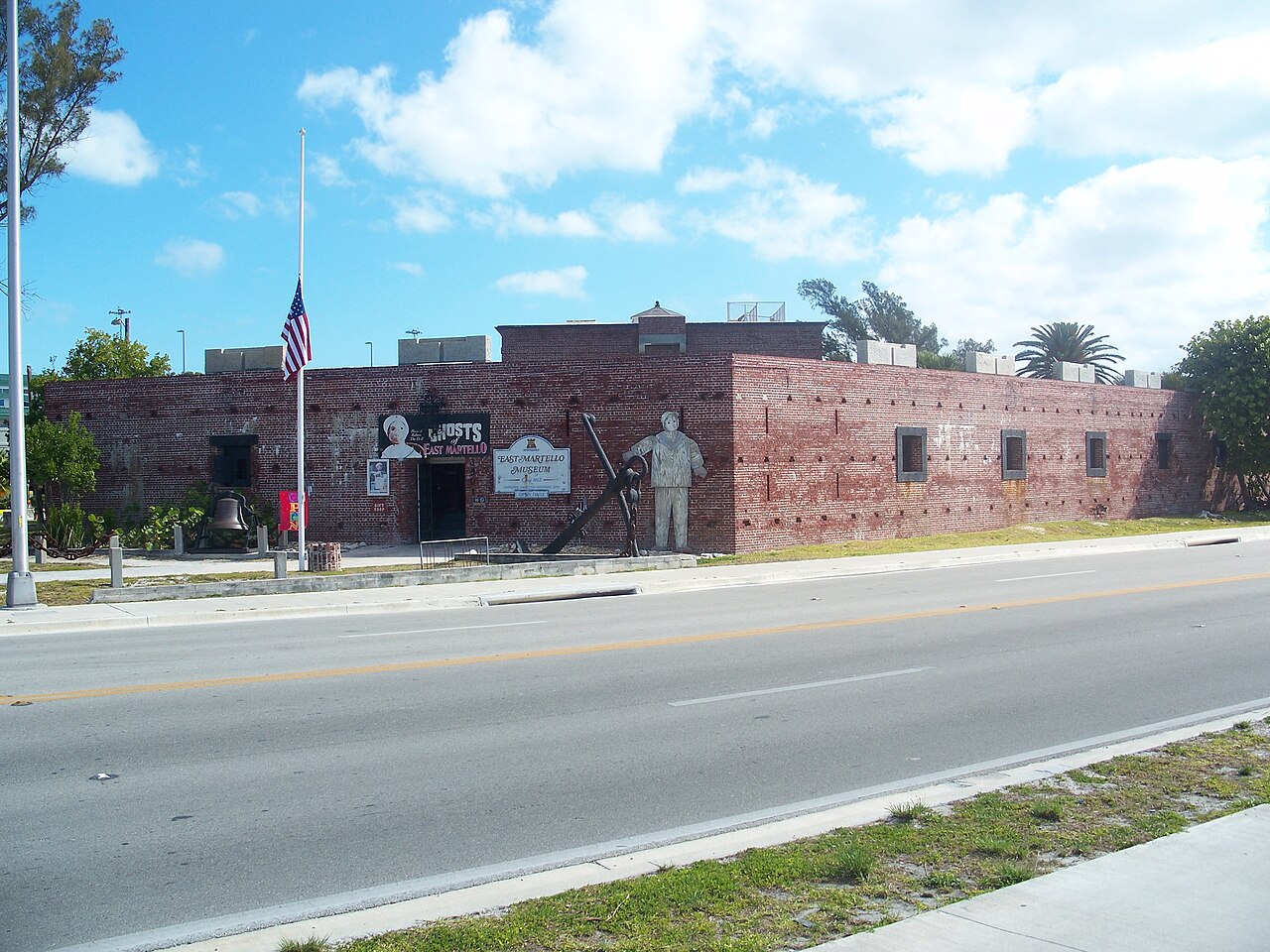
Those reports belong to Robert’s years in the house. The original doll is no longer at the inn. A turret reservation does not put him in your bedroom; his current home is Fort East Martello Museum.
.jpg)
Footsteps, giggling and a reporter’s uneasy visit
The Key West Art & Historical Society’s exhibit account goes beyond a general claim that the doll is haunted. It describes tenants hearing movement in the attic above them and a plumber hearing giggling before turning to discover Robert had apparently changed position.
Its most specific visitor is Solares Hill reporter Malcolm Ross. He described an intense physical chill when he entered Robert’s room. Initially, the doll seemed to him like a child expecting punishment. As companions explained its history and pointed out the small furniture, Ross thought its expression altered.
Then someone disparaged Gene Otto. Ross interpreted the doll’s next expression as contempt, leaving him with the conviction that it had understood the conversation. This is a named person’s reported perception, preserved by the museum; it does not establish that the face physically moved.
The exhibit also connects Robert’s museum years with electronic malfunctions and apologetic letters. These are reports about a later location, not evidence that the same things happen in today’s guest rooms.
Who were Gene and Anne?
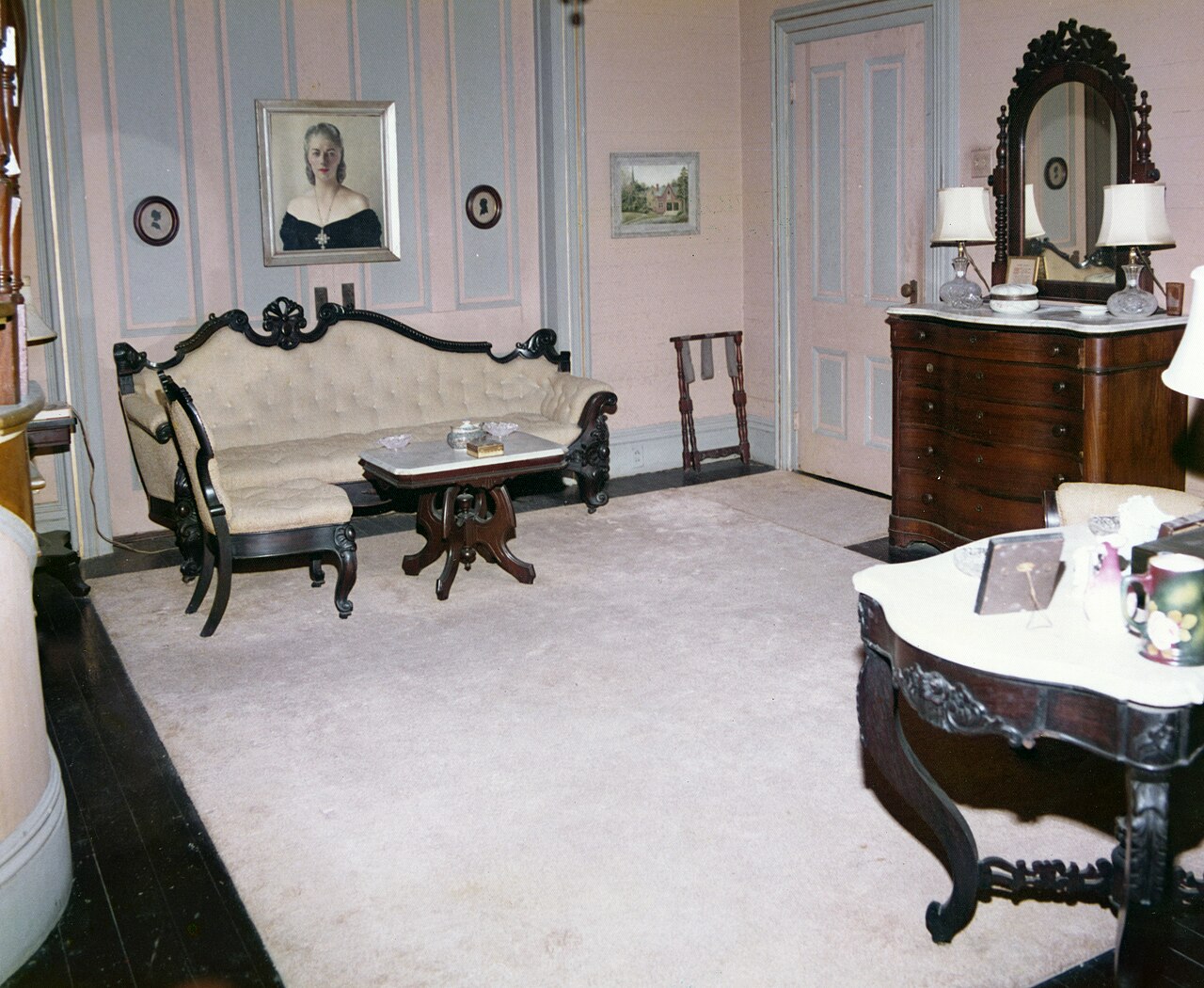
The inn identifies Anne as the pianist Annette Parker, whom Gene met while studying in Paris. They married there in 1930. He brought painting to their shared life; she brought music. The house’s late-Victorian architecture predates their marriage, belonging to the earlier Otto family home.

Was Robert really a servant’s cursed gift?
Versions disagree over who gave Gene the doll. The inn repeats a servant-gift tradition. Researcher David L. Sloan’s current account instead identifies Robert as a German Steiff creation brought home by Gene’s mother, Minnie, in 1904. That is a materially different origin from a servant making a cursed toy.
Sloan connects parts of the later nanny legend to a woman named Emmeline Abbott and a conflict with the Otto family. His proposed spiritual explanation is explicitly a theory. A historical disagreement does not prove a curse, and the servant story should not be treated as established history.
The haunting followed Robert out of the house
According to Sloan, later caretaker Myrtle Reuter took Robert to a different Key West home in 1980. She reported disturbing experiences there, including believing he had held a door shut against her. She donated him to the museum in 1994. This intervening chapter matters: Robert’s journey was not simply from Gene’s turret straight into a glass case.
That separation lets you follow the legend without collapsing every anecdote into one building. Anne’s staircase, Robert’s turret years, Myrtle’s later home and the museum each belong to a different part of the story.
Staying in the Turret Suite
If the staircase story is what draws you here, start with the official Turret Suite description. The present layout begins on the second floor with a queen bed and sitting area. An internal stair climbs into the octagonal turret, where a double bed sits among seven tall windows. The suite has two bathrooms and a private balcony.
The vertical layout makes this an unusually tangible ghost-story setting: the stair is part of the accommodation you book. It also means you should ask about the climb before reserving. Older ghost articles sometimes describe different beds; use the current room page for the sleeping arrangement.
The separately named Anne Suite is a different room. A room bearing Anne’s name should not be confused with the Turret Suite staircase account.
Before you reserve
The inn’s current policies list check-in from 3–5 p.m. and checkout at 11 a.m. Arrange a later arrival directly. The property has entrance steps, narrow passages and no elevator; contact staff about your specific access needs.
Its published child-age wording differs between pages, so confirm directly if travelling with children. Check your reservation’s cancellation deadline and the total for everyone staying: the Turret Suite can accommodate four, but the quoted base rate covers two. Call 305-296-3977 for room and policy questions.
Follow the story from the house to the museum
1. Begin at 534 Eaton Street
View the Artist House from the public street and look up toward the turret. The window stories give you something specific to picture. This is a working guesthouse: interior access depends on permission or your own reservation.
Ghost City Tours currently lists the house on its Ghosts of Key West route. Check the itinerary before booking and ask whether the stop is exterior-only; a walking-tour ticket should not be assumed to include a guest-room visit.
2. Meet Robert at Fort East Martello
The museum’s visitor page lists 3501 South Roosevelt Boulevard, with daily hours of 10 a.m.–5 p.m. and last admission at 4:30 p.m. At the research date, adult admission was $17 at the door or $15.50 online. Check the museum’s own ticket page for current prices and opening changes.
Allow separate travel time from Old Town. Inside, the setting changes from a family house to a brick fort with local-history displays and Stanley Papio’s metal sculptures. You can place the doll within the island’s wider history rather than treating the visit as only a dare.

3. Choose an after-dark encounter if you want more time
Sloan’s Robert the Doll After Dark offers two separately ticketed formats. The roughly one-hour Essential experience combines a fort ghost tour with a seated Robert encounter. The two-hour VIP option adds independent investigation time with equipment provided.
The operator currently admits ages 10 and older, with an adult required for under-18s. Transport is not included. Read the chosen ticket’s terms and confirm any mobility arrangements before booking.
You may have heard that photographing Robert requires his permission. That is part of the doll’s folklore; the current operator explicitly says it is not required. Follow the museum or guide’s actual photography instructions. Nobody needs to interpret a camera fault or subsequent bad luck as proof of a curse.
What should you expect?
Come for a place with stories worth hearing. A quiet night in the house can still be a rewarding stay, and watching a motionless doll can still be unsettling once you know why people wrote about it.
If anything unusual happens, record the time, location and what you noticed before attaching a name to it. Keep your own observation separate from what a guide told you. That is how an interesting experience becomes a useful account rather than another anonymous sentence copied across the internet.
For the next chapter, explore our Florida haunted-hotel guide, including Marrero’s family-haunting tradition in Key West. Heading back toward Miami? Read the Biltmore’s elevator and tower stories, or browse the full haunted hotel collection.
Sources & images: Sources are linked beside the accounts they support. The inn, museum and tour operators preserve different versions; reported experiences remain attributed to them. This article includes four credited photographs and one labelled AI-created cover. The hotel, museum and tour links above are direct links without affiliate tracking added by Go Ghostly. Other pages may contain affiliate links; read our disclosure.