



St. Pete Beach, Florida · The haunted hotel collection
The Don CeSar: Ghost Stories, Thomas Rowe’s Legend & Where to Stay
A man in a white suit welcomes a guest, then disappears. A hotel employee recognises a stranger from an old photograph. On the beach, two figures walk together where a love story supposedly ended long ago.
These are the stories that follow The Don CeSar, the great pink hotel overlooking St. Pete Beach. Its best-known ghost is its founder, Thomas Rowe: a presence often portrayed as still keeping an eye on the place he built. Around him gathers a more romantic legend, involving a woman named Lucinda and a reunion that could only happen after death.
The appeal of an overnight visit is that the setting survives. You can stay in the historic hotel, learn about its changing fortunes and spend the evening beside the same shoreline that appears in the tales. Here is what the sources actually say—and what to know before booking.
Researched September 27, 2026. This is a researched travel guide, not a firsthand stay or paranormal investigation. Ghost accounts are attributed reports and folklore; historical events and current hotel information are identified separately.
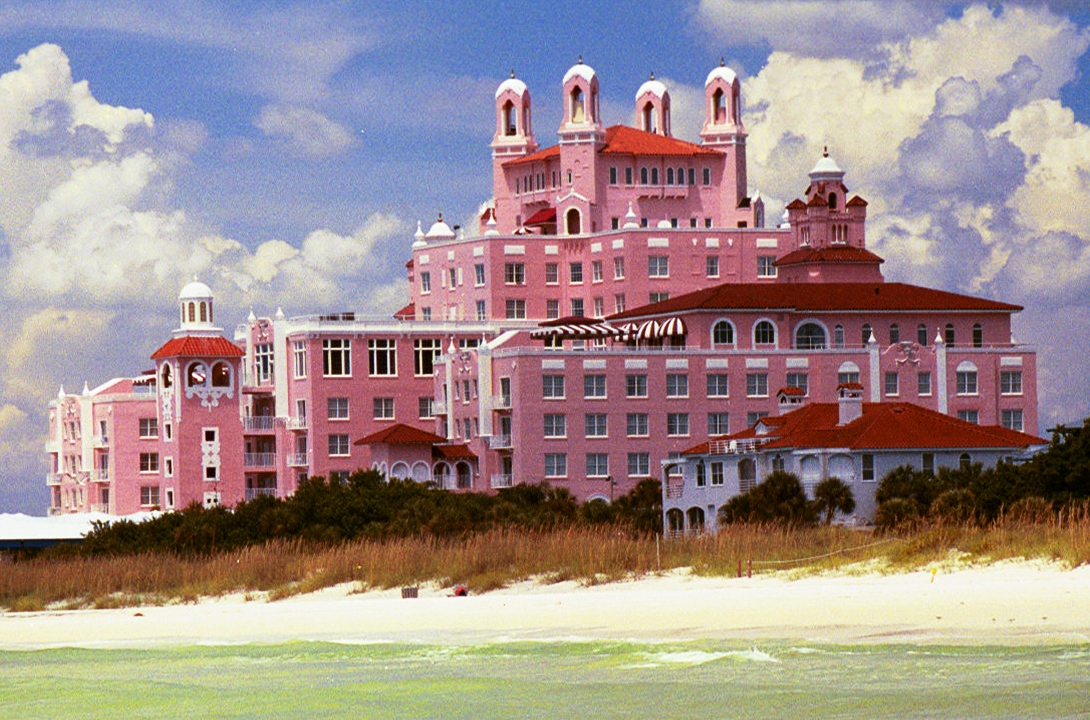
The ghost stories of Florida’s Pink Palace
Thomas and Lucinda: the romance behind the haunting
In Nightly Spirits’ version of the legend, a young Rowe meets Lucinda, an opera singer, while studying in London. Her family disapproves and takes her back to Spain. His letters come back unopened. Years later, a final message from Lucinda promises that she will wait for him by their fountain.
The story makes the Florida hotel a monument to that separation, with a fountain recalling their old meeting place. It also gives the later sightings their emotional centre: the solitary founder is sometimes accompanied by a dark-haired woman, identified in the lore as the lover he lost.
There is no single consistent version. Tampa Terrors instead places their meeting in Spain. Those conflicting settings are a reason to present the romance as a legend, rather than reconstructing an exact biography from ghost-tour retellings. The hotel’s own history embraces the lost-love connection, but that does not authenticate every letter, conversation or apparition attributed to the couple.
The smiling man who vanishes
Haunted Rooms describes a recurring figure in a white suit and Panama hat, seen on the beach and around the hotel. Some accounts have him smiling at arriving guests before disappearing. The lobby, garden and fifth floor appear in the retellings. It is the image of a host continuing his rounds, rather than an intruder trying to drive visitors away.
The detail to notice is how ordinary he initially seems. A well-dressed man greeting someone in a hotel is easy to overlook. Only the disappearance transforms the encounter into a ghost story. That same pattern appears in an older account with a named hotel source.
The stranger in the staff photograph
Travel writer Kathleen Walls, in her 2008 American Roads feature, quotes Susan Owen, then identified as director of guest services. Owen recalls renovation workers asking about a white-haired man who questioned their work. He apparently looked like a normal person, not a transparent apparition.
The feature also recounts a receptionist seeing a man in white beachwear and a Panama hat while on the beach with her husband. Later, during orientation, she recognised him in a photograph of Rowe. Owen describes her own smaller experiences too: elevator doors opening at just the moment she needed to hurry something back to a guest.
These are recollections reported through a travel writer, rather than independently tested evidence. Still, the named source and recognisable work routines give the accounts more substance than a bare claim that a hotel is haunted.
A shower running in an empty bathroom
A 2008 Naples Daily News feature recounts a guest found sleeping in the lobby after being disturbed in his room. In the story, the shower switches on while he is asleep. He turns it off, returns to bed, and it starts again; this time the bathroom door also opens. He gives up on sleeping upstairs.
The same feature describes a reservation clerk carrying tea and cups from the kitchen, with swinging doors opening before she reaches them. The incidents are interpreted as Rowe still assisting his staff. The article does not identify the guest or clerk, so the source supports the existence of the stories, not proof of what caused the events.
The couple who left no footprints
Tampa Terrors retells a more elaborate beach encounter. A widower returns to the hotel where he once holidayed with his wife and notices an older couple near the water. The man wears white; his companion wears pink. As the visitor watches, they seem to hover above the sand without leaving footprints. When he looks back after searching for another witness, they have vanished.
The storyteller connects the pair with Thomas and Lucinda. The account supplies no named witness or independently checkable date. Read it as part of the hotel’s romantic folklore: its power lies in the thought of two people finally finding each other, rather than in an evidential claim.
Do the wartime years have ghosts of their own?
Nightly Spirits’ retelling also associates unexplained noises, unsettling sensations and figures in older clothing with the property’s military-hospital period. Those reports are much less specific than the Rowe stories: there is no clearly established named patient or room to follow.
The hospital chapter is real history. Identifying an unexplained sound as a former patient’s spirit is an interpretation layered onto it. For a visit, the more useful question is how the building changed during wartime and restoration—and which surviving spaces a guide can show you.
The history behind the stories
The hotel’s official timeline provides a firmer framework for the visit:
- 1928: Thomas Rowe opens The Don CeSar on St. Pete Beach.
- 1940: Rowe dies suddenly; his estranged wife, Mary, inherits the property.
- 1942: The U.S. Army purchases it for hospital use, followed by a convalescent centre for returning airmen.
- After the war: Government offices occupy the property until it is vacated in 1969.
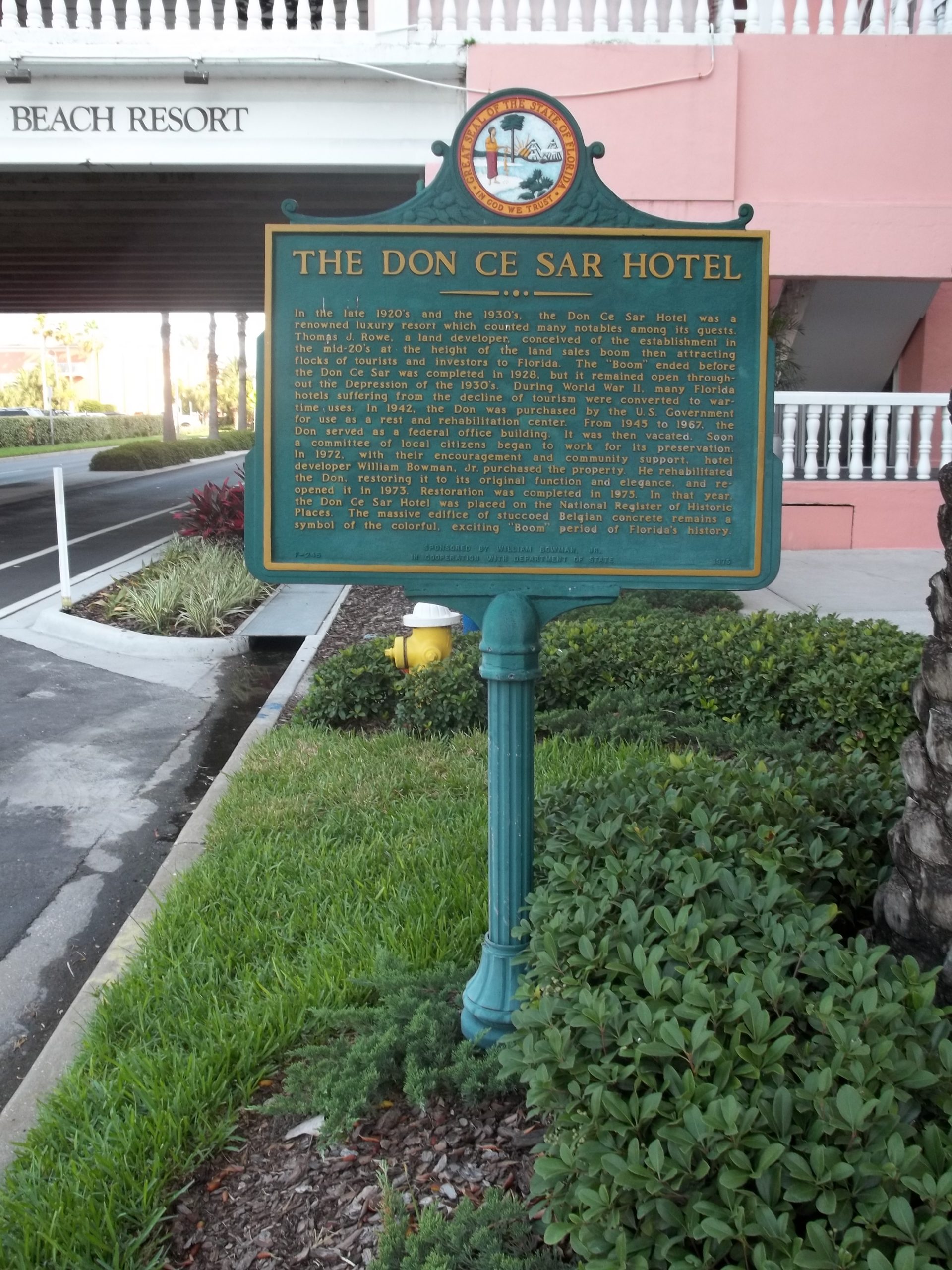
- 1971–1973: Preservation campaigners organise, a new owner begins restoration, and the building reopens as a resort.
That return to hotel life is a useful backdrop to the renovation-era sightings. The same building has housed holidaymakers, recovering servicemen and office workers; its present appearance reflects restoration as well as its original design.
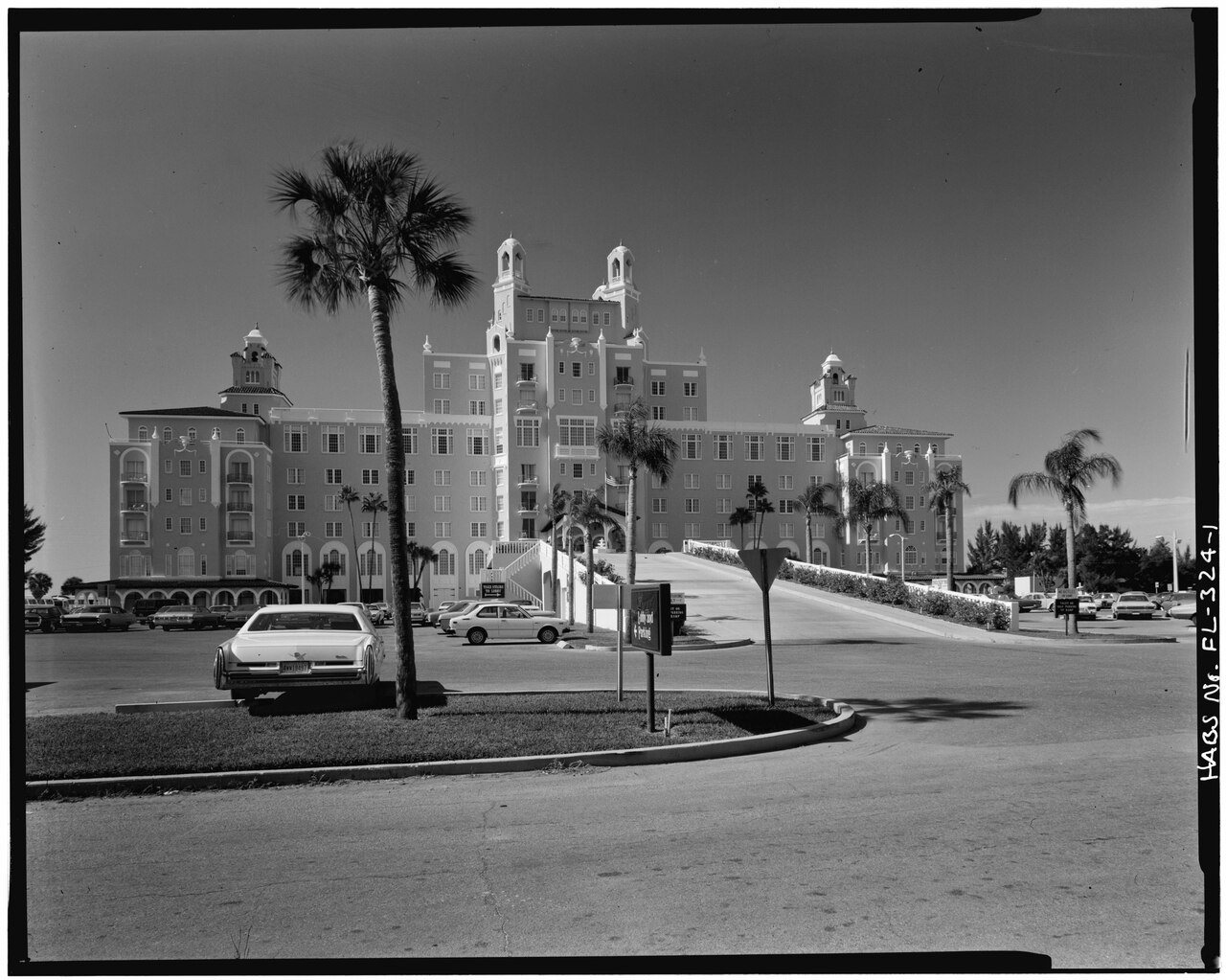
Walls’ historical retelling says the original angel fountain was removed during government ownership. Do not assume a fountain you see today is the one described in the romance. Asking a docent where the original stood is a better starting point than treating every decorative feature as a haunted landmark.
Where to stay: the historic hotel or Beach House Suites?
For a trip built around the Rowe stories, choose a room in the main Don CeSar. Beach House Suites is a separate property: staying under the same brand does not put your bedroom inside the Pink Palace.
| Choice | Why consider it? | What to confirm |
|---|---|---|
| Main Don CeSar | The historic building and the setting associated with the Rowe legends. | Exact room category, view, bed configuration and any location request. |
| Beach House Suites | A separate beachfront stay with kitchenettes, private balconies and more apartment-like space. | Travel between properties, parking, included resort access and suite occupancy. |
The Beach House Suites overview places it about half a mile up the beach from the main hotel. Its kitchens and gathering space may suit a longer visit, but check the actual walking or transport arrangements for your group.
Views, balconies and accessible rooms
The current accommodation list distinguishes city views, partial Gulf views and beach-and-Gulf views. It also lists rooms with balconies separately. A room name containing “Gulf View” does not, by itself, promise a balcony.
For two people wanting time outdoors, compare the Grand Gulf View King with Balcony against the non-balcony version. For more space, compare a junior suite with a separate one-bedroom suite rather than assuming “suite” means the same layout throughout.
Accessible categories include named roll-in-shower rooms. Confirm the exact bathroom, bed height and route to the room, restaurants and beach facilities directly with the hotel. An accessible bedroom does not tell you everything about moving around the wider resort.

Booking costs and practical details
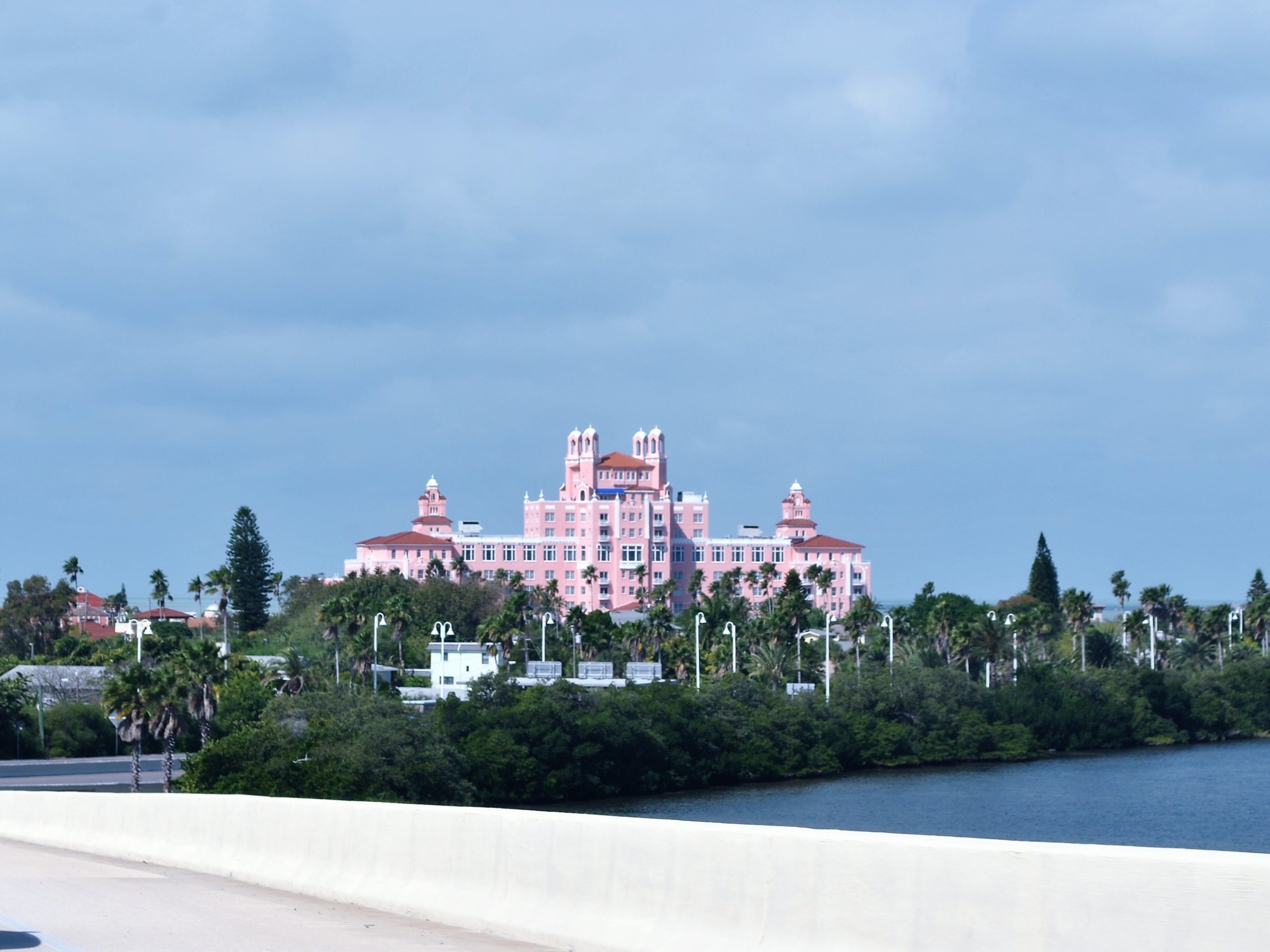
The hotel is at 3400 Gulf Boulevard, St. Pete Beach, Florida. Keep St. Pete Beach separate from downtown St. Petersburg when arranging dinner or tours; check the actual meeting address and allow for transport.
The following amounts are in U.S. dollars, as listed on the hotel FAQ and amenities page when researched. Your dated booking terms take precedence.
| Item | Published charge or rule |
|---|---|
| Resort fee | $40 plus tax per room daily. |
| Self-parking | $28 plus tax per day. |
| Valet parking | $38 plus tax per day. |
| Pets | $75 nightly; maximum two per room, with first-floor accommodation specified. |
| Minimum check-in age | 21. |
| Check-out | 11 a.m. |
For example, two nights with the listed daily resort fee and two days of self-parking add $136 before tax, unless already included or waived by your rate. That is before the room, meals and other purchases. Check the final total so you do not count an included charge twice.
The FAQ’s cancellation section still references a 2024–2025 holiday period. Use the cancellation deadline and deposit rules on your actual reservation, especially for prepaid or promotional rates. Confirm check-in time and any incidental hold before travelling.
What is included—and what needs its own reservation?
The FAQ lists beach loungers and an umbrella, Wi-Fi, fitness access and other benefits within the resort fee. Some activities have restricted hours. Ask which inclusions apply to your dates rather than assuming that every rental or class is unlimited.
The amenities list includes pools, dining, fitness facilities and spa services; breakfast is marked as an extra-cost item. Spa Oceana lists relaxation facilities and a rooftop area, but treatments and spa access should be checked separately from the room reservation. Leave room in the budget for the parts of the resort you actually intend to use.
The hotel history tour: a useful way inside the story
The Don CeSar offers its own docent-led History Tour, covering the hotel’s early years, wartime changes, famous visitors and restoration. The published programme is a history experience, not a promise of ghost sightings or a paranormal investigation.
- Duration: approximately one hour.
- Published schedule: Thursdays at 11 a.m. and 3 p.m.; Sundays at 3 p.m.
- Listed price: $35 per person, before tax and service charges.
- Group size: up to ten guests.
- Tour parking: the page lists discounted self-parking at $17.50 for up to three hours.
Check the live calendar before choosing travel dates. Good questions for your guide include where Rowe lived, how the hospital conversion altered the building and what survives from the original public rooms. Ask which parts of the Lucinda narrative are supported by the hotel’s records.

Can you visit without an overnight booking?
The FAQ welcomes non-guests to dining and retail outlets. Pool and resort access are separate: day passes depend on availability. A restaurant booking does not automatically grant use of all facilities.
For a ghost-focused outing, verify the route with the operator before buying. An online story about The Don CeSar does not establish that the writer’s Tampa or St. Petersburg walking tour visits the hotel. Book against the itinerary, not the photograph used to promote it.
A two-night stay with time for both the beach and the stories
First afternoon: arrive with daylight left and orient yourself around the main building. Compare the actual towers and shoreline with the photographs above. Leave enough time for dinner and a sunset walk in permitted areas; the Rowe stories make an atmospheric read afterwards.
Full day: take the history tour if it runs during your stay. Follow it with beach or pool time so the resort is part of the holiday, not just a bed between excursions. If you choose an off-property ghost walk, arrange the return journey before leaving and confirm how much walking is involved.
Departure morning: allow time for breakfast and packing before check-out. If you want to continue using facilities afterwards, ask about luggage storage and post-check-out access rather than assuming it is included.
For a broader Gulf Coast trip, compare The Vinoy’s waterfront city setting in our Florida hotel collection. For a smaller inn with a named room tied to its lore, consider St. Francis Inn in St. Augustine as a separate destination.
Is The Don CeSar the right haunted stay for you?
Choose it when a beach resort and a historic setting appeal in their own right. Its supernatural identity is unusually personal: a founder apparently still at work, a lost lover, and small encounters that interrupt the ordinary business of a hotel.
There is no verified haunting to purchase and no dependable room-number shortcut. What you can book is time in the building behind the stories, with a real history tour and the shoreline just outside. For the right traveller, that is plenty to build a memorable weekend around.
Booking disclosure: The hotel and history-tour buttons in this guide link directly to The Don CeSar. They are not affiliate tracking links. Other Go Ghostly guides may contain affiliate links; read our disclosure.